



 23 марта 2026
 219
219Illness as a process, not a chance occurrence
Modern views on health have long focused exclusively on the body. Illness was seen as a system malfunction that needed to be fixed. However, it is becoming increasingly clear: a person is physiology. It is a holistic system where body, mind, emotions, lifestyle, and inner state are in constant interaction. It is precisely in this interaction that health is formed, or conversely, lost.
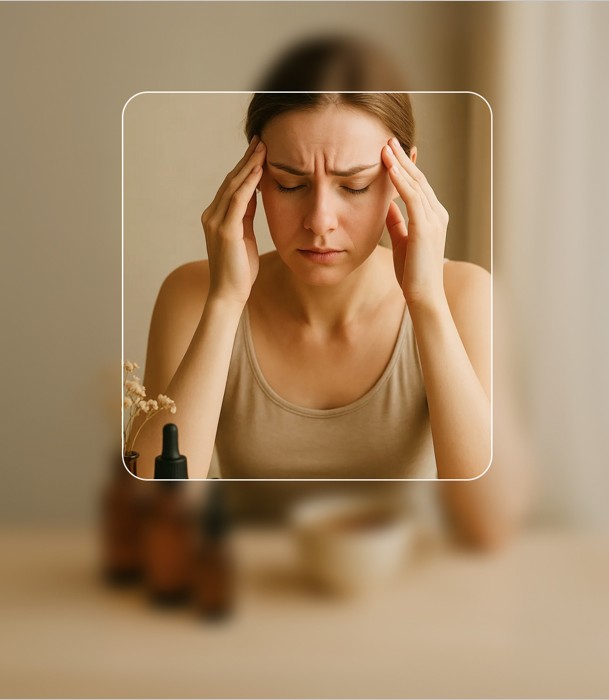
From a naturopathy perspective, illness doesn't arise suddenly. It develops as a process—the result of an accumulated imbalance that has long gone unnoticed or ignored. Initially, changes occur not at the physical level, but at the level of one's state. A person begins to live in constant tension, acceleration, and internal pressure. Fatigue sets in, energy declines, irritability, anxiety, and a sense of inner distress appear. This isn't yet a disease. It's a phase in which the body is still coping.
But this is where the process begins.
The connection between inner state and body
As Debbie Shapiro notes, the body is not separate from the mind. It reflects everything that happens within a person – their thoughts, emotions, and internal conflicts. What is not acknowledged and processed subsequently finds physical expression.
In a Kabbalistic approach, the external is seen as a reflection of the internal state. A disruption of internal equilibrium will inevitably manifest on a bodily level. In this sense, illness is not a randomness, but a manifestation of a deep-seated imbalance.
Ayurveda defines this process as being due to an imbalance of the doshas – the fundamental principles that regulate the body's functions. When a person lives out of sync with natural rhythms, ignoring their body's and psyche's needs, this balance gradually shifts.
Different approaches use different language, but they point to the same thing:
Illness is the beginning and manifestation of a problem.
Why does the body start to signal
The body has a vast capacity for adaptation. It can compensate for strain, stress, and internal tension for a long time. But when this resource is depleted, another signalling mechanism kicks in.
Symptoms arise. At this point, the body is not destroying – it is stopping. It is showing that the previous lifestyle is not safe.
Chronic stress, suppressed emotions, internal conflicts, living «by dint of effort», lack of recovery and contact with oneself — all of this gradually depletes the nervous system and disrupts internal regulation.
When a person stops hearing themselves, the body starts to speak for them.
And often it is illness that becomes the language that cannot be ignored.
Turning point
This doesn't mean that these illnesses are exclusively psychological in nature. Physical factors—infections, genetics, nutrition, and environment—certainly play a role. But a person's internal state determines how resilient the body is to these factors, how it recovers, and how long it can maintain balance. Therefore, in a holistic approach to health, the key question is not simply "treat," but "what state does a person live in?".
True recovery begins with the suppression of symptoms and the return of balance.
When internal tension decreases, the nervous system begins to recover. When space for rest and recovery opens, the body gradually returns to its natural regulation. And it is at this point that real change occurs. Sometimes, illness becomes a turning point. A point at which a person first breaks free from the familiar pattern and begins to ask themselves:
And in this sense, illness can become not only a problem, but also a beginning.
Because in the end, the choice always rests with the individual: to continue on the path of depletion or to gradually return to balance, wholeness, and health.